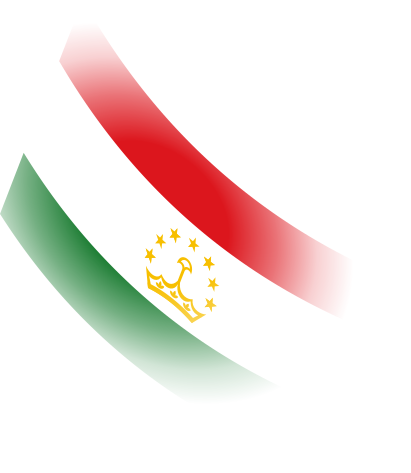
Within the system of values that underpins national statehood, the State Flag holds a special place as one of the most important symbols of sovereignty, political independence, and state unity. Its meaning is not limited to the outward representation of the state; it encompasses a range of historical, political, legal, and spiritual values that are fundamental to the formation and development of an independent state. From this perspective, the State Flag is not only an official symbol of state authority but also a means of expressing national self-awareness, historical memory, and the spiritual bond between citizens and the state.
In the theory of the state and social philosophy, “values” refers to phenomena that are decisive for society’s existence, sustainable development, and protection of its interests. State values are understood as a set of principles, norms, and symbols that reflect the political, legal, and spiritual foundations of the state. These include independence, sovereignty, territorial integrity, national unity, and the rule of law. The State Flag brings these fundamental concepts together in a single symbol and provides a basis for society to understand them.
From a theoretical perspective, the relationship between the State Flag and state sovereignty is deeply legal and political in nature. Sovereignty, as a defining attribute of the state, expresses the independence of state authority in addressing domestic and foreign affairs. The State Flag is one of the official means by which this independence is represented. The existence of a national flag demonstrates that a state has an independent political identity and its own symbols of statehood.
In the history of Tajik statehood, national symbols are closely connected with the development of self-awareness and the preservation of historical and cultural values. Throughout its history, the Tajik people have built rich traditions of statehood, culture, and civilization. In this process, symbols of authority and markers of statehood served as means of expressing political unity and social belonging. The modern State Flag of Tajikistan can be understood as a continuation of these historical traditions and as part of the formation of an independent state.
Following the Republic of Tajikistan’s declaration of independence on September 9, 1991, the creation of independent state symbols became particularly important. The new Tajik state needed to establish official signs of its sovereignty that would also reflect the historical, cultural, and legal characteristics of national statehood.
The adoption of the State Flag of the Republic of Tajikistan on November 24, 1992, at the 16th Session of the Supreme Council of the Republic of Tajikistan was one of the important events in the history of the country’s modern statehood. It took place amid the complex political and social conditions of the early years of independence and represented a significant legal stage in the formation of the symbols of an independent state.
The importance of adopting the State Flag lies in the fact that political independence, in addition to legal recognition, requires official means of representing the state. The flag identifies state affiliation and is recognized as a symbol of the country’s territorial, political, and social unity.
The value embodied by the State Flag of the Republic of Tajikistan is also expressed in its design and symbolic elements. Its three colors—red, white, and green—together with the crown and seven stars, form the distinctive image of the country’s state symbol. In public consciousness, these elements are associated with history, culture, national aspirations, and the values of statehood.
Nevertheless, the significance of the State Flag is not limited to interpretations of its colors and imagery. Its essential meaning lies in its national status and its symbolic ability to unite citizens. The flag does not belong to a particular social group, region, or class; it represents the entire state and society. This quality makes it one of the shared national values of an independent state.
The State Flag also holds a significant place in the legal system of the Republic of Tajikistan. Under Article 3 of the Constitution of the Republic of Tajikistan, the state symbols of Tajikistan are the Flag, the Emblem, and the National Anthem. The State Flag therefore has constitutional status and is recognized as one of the official attributes of statehood.
This constitutional provision shows that the State Flag is not merely a spiritual or cultural phenomenon; it is also an independent subject of legal regulation. Its status is specified in national legislation, while legal rules govern its use and protection.
In this regard, the Law of the Republic of Tajikistan “On the State Symbols of the Republic of Tajikistan” provides an important legal framework for using the State Flag. This framework helps ensure a single official design, compliance with rules for its use, and protection of its status as a state symbol.
From the perspective of legal theory, constitutional recognition strengthens the State Flag’s status as a value. Once state values are enshrined in legal rules, they acquire not only spiritual significance but also official and generally binding force. As a result, attitudes toward the State Flag extend beyond personal feelings and become a matter of legal culture, civic responsibility, and respect for statehood.
One of the State Flag’s most important features as a value of an independent state is its role in shaping national identity. National identity, as a social and spiritual phenomenon, develops through a person’s awareness of belonging to a particular historical, cultural, and political community. Language, culture, historical memory, national traditions, and state symbols are among the core elements of national self-awareness.
Within this framework, the State Flag connects individual and shared national values. By understanding its meaning, a person recognizes their belonging to the state and society and feels more deeply the connection between their own life and the country’s development. Respect for the State Flag can therefore be an expression of national self-awareness and civic responsibility.
In this context, patriotism should also be understood as a phenomenon with social and civic content. Patriotism is not merely love of one’s homeland; it is a person’s conscious commitment to the interests of society, national values, and the future of the state. It is expressed through compliance with laws, fulfillment of civic duties, preservation of cultural heritage, constructive work, and contributions to society’s development.
From this perspective, the State Flag, as a shared national symbol, helps cultivate this outlook. Respect for it should go hand in hand with an understanding of independence, the value of peace and stability, the importance of national unity, and responsibility for the state’s future.
Another important aspect of the State Flag is its role in bringing society together. In modern society, citizens may differ in profession, age, worldview, social status, and other respects. Yet state symbols, as shared values, make it possible to express their belonging to one state in a common form.
The State Flag performs precisely this function. It is a shared symbol for all citizens and represents their belonging to the Republic of Tajikistan regardless of social differences. Its social significance is therefore reflected in the strengthening of solidarity, shared responsibility, and social unity.
In the context of globalization and expanding international relations, the State Flag’s role as a means of representing the country becomes even more apparent. At diplomatic events, international forums, sports competitions, and other official gatherings, the State Flag identifies the Republic of Tajikistan.
On these occasions, the flag not only represents the state but also evokes its history, culture, and national identity. This demonstrates that the value of the State Flag extends beyond domestic relations and has significance in the international arena.
In education and civic instruction, studying the meaning of the State Flag is an important part of developing national awareness. Educational institutions should give due attention to the history of the flag’s adoption, its constitutional status, and the role of state symbols in the development of statehood.
It is important that the study of state symbols not be limited to memorizing historical facts or holding festive events. Their legal, social, and spiritual significance should be explained in a scholarly manner so that learners develop a thoughtful understanding of the values of statehood.
In particular, professional development institutions can treat the study of state symbols as an important part of strengthening the legal culture and professional responsibility of public employees. A public employee represents the system of state administration in their work and should therefore regard compliance with legislation and respect for state symbols as elements of professional culture.
At the same time, understanding the State Flag as a value of an independent state should go hand in hand with respect for human rights and freedoms, the principles of legality, and social responsibility. In a rule-of-law society, the values of statehood develop not in opposition to human rights but in connection with them. Respect for the State Flag therefore acquires real meaning when accompanied by respect for the Constitution, citizens’ rights and freedoms, and the common interests of society.
This analysis shows that the State Flag of the Republic of Tajikistan, as a value of an independent state, has many dimensions. It is at once a symbol of sovereignty, an element of the constitutional order, a means of international representation, a factor in the formation of national identity, and an expression of the spiritual bond between citizens and the state.
The true significance of the State Flag lies in its ability to unite the values of independence, unity, peace, stability, and civic responsibility in a single symbol. Respect for it should therefore extend beyond a feeling of pride and be reflected in constructive action, respect for the law, protection of national interests, and contributions to the country’s progress.
Thus, the State Flag of the Republic of Tajikistan is one of the fundamental values of independent statehood and plays an important role in strengthening national self-awareness, civic culture, and social unity. Safeguarding its status, studying its historical and legal meaning, and fostering a thoughtful attitude toward this state symbol are important tasks of civic education.
The State Flag is a symbolic embodiment of independence, a sign of the existence of an independent state, and an expression of the historical and spiritual bond between generations of the nation. Respect for it means, above all, respect for the values of statehood, responsibility to society, and commitment to the future of independent Tajikistan.
Kholzoda Gulmurod Khol,
Head of the Education Department, Institute for Advanced Training of the Ministry of Justice of the Republic of Tajikistan