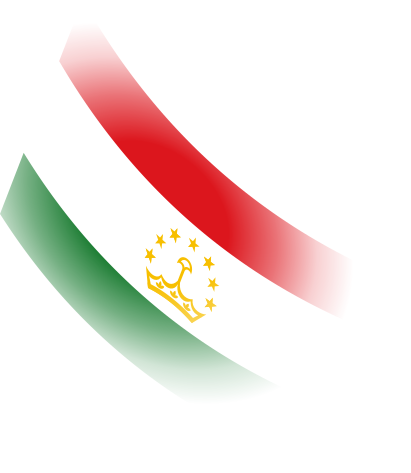
The State Flag of Tajikistan at a border crossing and at the building of the country’s diplomatic mission abroad carries a shared meaning. In both cases, it makes it possible to identify the Republic of Tajikistan as a particular state. However, the legal status of these two locations differs. At a border crossing, the flag points to the state border and the activities of Tajikistan’s competent authorities. At an embassy, it represents the state on whose behalf the mission acts. This distinction raises an important question for the theory of state and law: when we call the flag a symbol of sovereignty, what is the relationship between sovereign authority itself and the symbol that expresses it?
Sovereignty is a fundamental characteristic of the state with two interrelated aspects. Its internal aspect is expressed in the supremacy of state authority within the country’s territory. Through its competent authorities, the state establishes generally binding rules, ensures their enforcement, and resolves legal disputes according to established procedures. The external aspect of sovereignty means that the state acts independently in its relations with other states, determines its foreign policy, and undertakes international obligations. The flag serves as a common means of representing both aspects of sovereignty. Within the country, it points to the unity of state authority; abroad, it signifies the state’s independence in international relations.
In theoretical analysis, a distinction should be made between the characteristics of statehood and official state symbols. When examining the existence of a state, one considers its territory, population, public authority, and capacity to conduct external relations independently. The flag, in turn, serves to identify and represent that state. Tajikistan’s recent history clearly illustrates this distinction. On September 9, 1991, the Republic of Tajikistan declared its state independence. The State Flag of Tajikistan was adopted on November 24, 1992, at the sixteenth session of the Supreme Council. Thus, state sovereignty provided the legal and political basis for choosing the flag. Its adoption gave Tajikistan a distinct symbol through which to express its independence officially.
From this perspective, the authority to choose the flag is itself one expression of sovereignty. The state determines which symbol will represent it, what its official design will be, and how it is to be used. This choice has general significance for all state bodies. If every institution could alter the state symbol at its own discretion, it would be impossible to present the country as a unified whole. The approval of the flag’s design therefore has two consequences. On the one hand, the state acts independently in choosing its symbol. On the other, once the design has been officially approved, its bodies are required to follow it. This shows the connection between sovereignty and legality. The will of the state is expressed in legal form and establishes a binding rule for the future conduct of state bodies themselves.
The Constitution of the Republic of Tajikistan provides a clear basis for understanding this relationship. Article 1 recognizes Tajikistan as a sovereign state. Article 3 identifies the Flag, the Emblem, and the National Anthem as the state symbols of Tajikistan. Article 6 provides that the people are the expression of sovereignty and the sole source of state power. Each provision addresses a separate issue. The first establishes the nature of the state, the third identifies its official means of representation, and the sixth specifies the source of power. Read together, these provisions show that the flag represents the Republic of Tajikistan as a sovereign state whose authority derives from the people. This gives the flag national significance.
The unity of authority is especially important for understanding internal sovereignty. In a state governed by the rule of law, legislative, executive, and judicial functions are divided among different bodies. Parliament adopts laws, executive authorities ensure their implementation, and courts resolve legal disputes within their jurisdiction. Despite their different functions, all three branches operate within a single constitutional system. Their use of the same flag expresses this common framework. In a courtroom, the flag indicates that the court belongs to the state of Tajikistan. However, the procedure for hearing a case, the limits of the court’s jurisdiction, and the grounds for its decisions are determined by the Constitution and the law. This example shows that the unity of the state symbol is fully compatible with the functional independence of state bodies.
The same precision is needed when considering the territory of the state. For a traveller, a flag raised at a border crossing has a clear meaning. The traveller understands which state’s territory they are entering and which country’s authorities will carry out the relevant procedures. The legal basis of the border, however, derives from the applicable legal instruments and procedures. The flag makes the territorial boundary visible to the observer. The embassy example shows another side of the issue. The Tajik flag on a diplomatic mission’s building represents the sending state. Its presence does not mean that the territory on which the building stands belongs to Tajikistan. In one case, the flag points to the exercise of authority within the state’s territory; in the other, it points to the state’s representation beyond that territory. A legal explanation of either situation must take account of both the meaning of the symbol and the legal basis for the body’s activities.
The external aspect of sovereignty is also expressed through the use of the flag at intergovernmental meetings. Specific individuals take part in negotiations, but the issues under discussion concern relations between states. Flags displayed at the meeting venue show which state each delegation represents. The authority to sign a document derives from the person’s office or from the relevant credentials. In this context, the flag’s significance lies in making each party’s official identity clear to the participants and the public. A negotiating delegation may change, but the state remains a party to the relationship. This distinction between the individual representative and the state being represented is one of the theoretical foundations of the flag’s status.
Another feature of the flag is its ability to express the continuity of statehood. The terms of elected bodies come to an end, institutional leaders change, and the structure of government may be improved. Throughout these changes, the state’s legal identity continues. The use of a single flag allows citizens and foreign partners to see that the same state continues to function despite changes in its personnel. For independent Tajikistan, this aspect also has historical significance. The flag adopted amid the difficult circumstances of 1992 still represents the Republic of Tajikistan today. The experience of generations and their living conditions have changed, but the flag preserves the connection between the founding period of independent statehood and its present stage of development.
In relations between the individual and the state, sovereignty also entails mutual responsibility. When a citizen approaches a state authority, the flag displayed on the building helps them identify the institution as an official body. The citizen then evaluates the state’s conduct through the specific actions of its employee. Was the request considered within the authority’s jurisdiction? Were the reasons for the decision explained to the person? Were consistent requirements applied to similar cases? These questions concern the essence of a state governed by the rule of law. Sovereign authority acts through law, and public officials are responsible for how they exercise their powers. For this reason, studying the flag as a symbol of authority is directly connected to a public servant’s understanding of the legal limits of their own competence.
In legal education, this topic can be studied by comparing three situations. The flag outside a courthouse, at a border crossing, and outside an embassy represents the same state. Asking learners which authority acts in each situation and where its powers come from requires them to distinguish between the symbol, the authority’s competence, and the limits of the exercise of power. A further question then arises: if a state representative changes during an official ceremony, which element of the relationship remains unchanged? The answer clarifies the concept of state continuity. The educational value of this analysis is that it explains the relatively abstract concept of sovereignty through situations familiar to learners.
This same connection between history and theory is important for understanding the significance of State Flag Day. The adoption of the flag at the sixteenth session of the Supreme Council was one of the decisions made during the formation of the institutions of independent Tajikistan. In the public work of the President of the Republic of Tajikistan and Leader of the Nation, His Excellency Emomali Rahmon, remembrance of this event is regularly linked to the protection of independence, peace, and national unity. For the generation born after independence, the educational significance of November 24 lies in understanding this historical background. Knowing the circumstances in which the flag was adopted helps young people understand independence as a historic achievement. Understanding the flag’s legal status, in turn, clarifies which institutions and principles underpin the functioning of independent statehood today.
Thus, the statement “the flag is a symbol of sovereignty” has a precise legal meaning. The flag makes the state of Tajikistan identifiable at home and abroad, expresses the unity of authority alongside the distribution of its functions, and demonstrates the continuity of the state as its representatives change. The basis of this meaning lies in the connection between three concepts. The people are the source of power; the state exercises that power within the framework of the Constitution through its competent authorities; and the flag represents that sovereign state. Therefore, conscious respect for the State Flag of the Republic of Tajikistan acquires real meaning through recognition of the people’s sovereignty, respect for the law, and accountability of everyone who acts on behalf of the state.
Ghayurzoda Shuhratullo Karomatullo,
Deputy Rector for Research, Institute for Advanced Training of the Ministry of Justice of the Republic of Justice of the Republic of Tajikistan