The formation of a person’s identity is a complex sociocultural process shaped by a combination of historical, spiritual, and linguistic factors, as well as the social environment in which a person develops. In this process, family, language, culture, historical memory, and attachment to one’s homeland play a defining role as the foundations of individual and national self-awareness. At the early stages of personal development, one’s birthplace is not only a geographical setting but also the first environment for socialization and for learning spiritual values, standards of conduct, and cultural traditions. As a person’s worldview expands, social awareness develops, and knowledge grows, their understanding of the homeland moves beyond a narrow local attachment and acquires broader historical, social, and state-related meaning. Gradually, a person recognizes the connection between their own fate, family history, and the development of society, and views social stability, the preservation of national values, and the progress of the state as important conditions for a достойную life for themselves and future generations. From this perspective, patriotism as a sociocultural phenomenon and an integral part of national consciousness means not only love for one’s birthplace and homeland, but also a higher form of awareness of national belonging, civic responsibility, and readiness to protect society’s interests, historical and cultural heritage, and the values of statehood. Thus, patriotism develops through the unity of individual and national self-awareness and is expressed through conscious action, respect for shared national values, and responsibility for the future of the state and society.
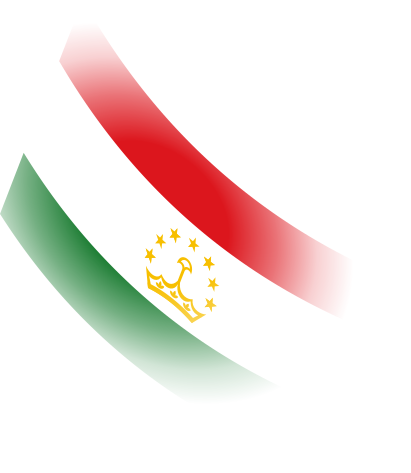
As civic self-awareness develops, a person’s relationship with the homeland also takes on a legal and social dimension. A person recognizes themselves as a member of a society whose residents, despite differences in language, family history, and local traditions, live within one state. From this perspective, respecting fellow citizens’ rights, treating public property responsibly, and participating in local problem-solving are also expressions of patriotism. The State Flag visibly represents this connection between the individual and society. In it, citizens recognize both the homeland familiar to them through personal experience and the state that belongs to all their fellow citizens.
To understand this relationship, it is theoretically important to distinguish between citizenship and civic identity. Citizenship is a stable political and legal relationship between a person and the state, expressed through their mutual rights and duties. Civic identity concerns how a person understands this belonging, what place they see for themselves in society, and what responsibilities they recognize toward their fellow citizens. A person’s citizenship status has a legal basis. Understanding what that status means develops over the course of life through education, interactions with others, and experience in exercising one’s rights. Therefore, the role of the flag in shaping identity should be considered in relation to the environment in which citizens learn and experience the meaning of this symbol.
In the theory of the state, state symbols serve a representative function. The state, as a political institution, acts through numerous bodies. Each body has its own powers, structure, and area of activity, but all belong to one sovereign state. The flag makes this unity recognizable despite differences in the functions of state bodies. For a village resident, a flag raised on the building of a jamoat—the local government—is a sign of the state’s presence where they live. The same flag at a diplomatic mission represents Tajikistan in its relations with another state. The scope of each body’s activities differs, but the state to which the symbol belongs remains the same. This has particular significance for citizens: even far from their birthplace, they can recognize their homeland by the same symbol.
The constitutional basis for the civic meaning of the flag follows from the relationship between Articles 3 and 6 of the Constitution of the Republic of Tajikistan. Article 3 recognizes the Flag, together with the Emblem and the National Anthem, as a state symbol. Article 6 identifies the people as the expression of sovereignty and the sole source of state power, and provides that the people of Tajikistan are made up of its citizens, regardless of nationality. Read together, these provisions lead to an important conclusion: the flag represents a state whose sovereignty belongs to the entire people. A person’s ethnic, linguistic, or local background therefore does not change what this symbol represents for them. Under this understanding, every citizen of Tajikistan has an equal constitutional basis for recognizing the flag as a symbol of their homeland.
This conclusion is also important for explaining the relationship between national and civic identity. The history of Tajik statehood, the Tajik language, and its cultural heritage are fundamental to understanding the historical foundations of Tajikistan’s independence. At the same time, the country’s present-day life is shaped by the collective efforts of all its citizens. These two aspects can be explained with a simple example. A child learns at home to speak their mother tongue, honor the memory of their ancestors, and follow family traditions. At school, the child meets peers who may have different languages and traditions. When the child learns about the State Flag, the idea of “our homeland” takes on a broader meaning. It now includes both the child’s own birthplace and the land and life experiences of their classmates. This expansion of the idea from “my birthplace” to “our common state” is one aspect of the development of civic identity.
The history of the State Flag’s adoption gives this analysis concrete meaning. On November 24, 1992, the State Flag of independent Tajikistan was adopted at the sixteenth session of the Supreme Council of the Republic of Tajikistan. This took place during a period when internal conflict had disrupted people’s lives, making the restoration of state institutions and the protection of citizens urgent priorities. In these circumstances, adopting the flag gave official expression to Tajikistan’s declared independence. The state gained a symbol through which it could represent itself within the country and internationally. The adoption of the Constitution in 1994 consolidated the flag’s status at the constitutional level. This sequence shows that in the early years of independence, building state institutions and establishing official symbols were interrelated parts of one historical process.
In the state leadership of the President of the Republic of Tajikistan and Leader of the Nation, His Excellency Emomali Rahmon, the honoring of the State Flag is closely connected with preserving the historical memory of independence and strengthening national unity. In this context, the transmission of historical experience from one generation to another deserves attention. For someone who lived through the events of the early years of independence, the 1992 flag is connected with personal memories, concern for loved ones, and hope for the restoration of peace. A young person born in peaceful times has seen the same flag since childhood at school, in the streets, and on government buildings. To help young people understand its historical meaning, they should learn the circumstances in which the decision to adopt the flag was made and why a shared state symbol mattered to society at that time. In this sense, celebrating State Flag Day creates an opportunity for generations to discuss the experience of independent statehood.
The civic meaning of the flag is also reflected in the rules governing its use. The Law of the Republic of Tajikistan “On the State Symbols of the Republic of Tajikistan” requires certain authorities to display the flag in designated places and also recognizes citizens’ right to use it respectfully. There is an important difference between these two forms of use. When a state authority raises the flag, it complies with the law and expresses its official status. A citizen who displays the flag at home on a holiday exercises a right voluntarily. In the first case, the state uses the symbol to represent itself to the citizen. In the second, the citizen uses that same symbol to express their belonging to the state. This two-way relationship allows the flag to have a place both in the official work of public authorities and in public life.
For the justice authorities, the connection between the flag and civic identity has a specific practical dimension. Citizens often approach these authorities at important stages of their lives. Registering a child’s birth, registering a marriage, or correcting information in civil status records is a personal matter and, at the same time, a legally significant action. The State Flag in the offices that register civil status records shows citizens that the relevant action is being performed on behalf of the state. The meaning of this relationship becomes clear during the service process. When an employee explains the legal basis for a decision, the procedure for submitting documents, and how the person can protect their rights in clear language, the person directly experiences their status as a rights-holder. This experience shapes their understanding of the relationship between the state and its citizens.
This leads to a specific educational task for the professional development system for justice-sector employees. Training on the rules for using state symbols should be connected with an examination of what it means for an employee to act on behalf of the state. For example, a training session could consider a case in which a citizen reports an error in a civil status record. The participant should identify the limits of the authority’s competence, explain the procedure for reviewing the matter, and clarify the applicant’s rights. The relevance of this exercise to the topic of the flag is that it helps employees understand the connection between an institution’s official status and their professional responsibility. The flag tells citizens which authority they are dealing with. The way an employee performs their duties allows citizens to assess that authority through their own experience.
Civic education for young people should also connect theory with questions students can understand through their own lives. For example, after explaining the history of the flag’s adoption, a teacher could ask: Why is this flag a symbol of a shared homeland for every student in the class, regardless of the language they speak at home? Answering this question requires students to connect citizenship, equality, and respect for cultural diversity. If they can explain this connection in their own words, their knowledge of the flag has acquired civic meaning. In assessing such a lesson, the quality of students’ reasoning and their ability to understand a classmate’s rights reveal more than simply recalling dates and visible features of the flag.
Ultimately, the legal status of the flag is determined by constitutional provisions, while its social meaning develops through the memory of generations and the everyday experiences of citizens. Patriotism gives this relationship its values-based meaning. Civic identity connects it to an understanding of rights, responsibilities, and belonging to a shared community. For independent Tajikistan, the significance of the State Flag lies precisely in bringing these connections together. Citizens recognize in it the history of their homeland and, at the same time, acknowledge that this homeland belongs equally to fellow citizens with different languages, cultures, and life experiences. This understanding gives national unity a concrete legal and human meaning.
Sobirzoda Isfandiyor Salom,
Rector of the Institute for Advanced Training of the Ministry of Justice of the Republic of Tajikistan, Candidate of Legal Sciences