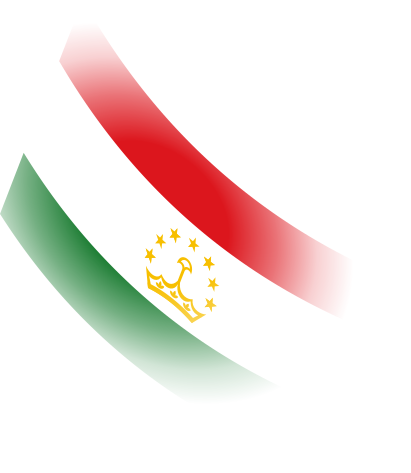
The Constitution of the Republic of Tajikistan recognizes state symbols as important elements of the constitutional order and expressions of state sovereignty. Under Article 3 of the Constitution, the Flag, the Coat of Arms, and the National Anthem are the state symbols of Tajikistan. Understanding the significance of this provision requires more than defining the word “symbol” or describing the Flag’s appearance. The central theoretical question is why the status of the State Flag is enshrined in the Constitution and what legal significance this recognition has for the state, its bodies, and its citizens. The answer lies in the place of Article 3 within the system of constitutional norms and its connection to the principles of state sovereignty, popular power, independence, and the unity of the state.
State theory distinguishes between the attributes of a state and its symbols. Territory, population, and public authority are fundamental to explaining a state’s existence and organization. A flag, in turn, visibly expresses the existence of a particular state and its political independence. Tajikistan proclaimed its state independence on September 9, 1991, and adopted its State Flag on November 24, 1992, at the 16th Session of the Supreme Council. This historical sequence is important for legal interpretation. State independence provided the basis for adopting a national symbol, while the adoption of the Flag gave official representation to sovereignty that had already been proclaimed. In this sense, the Flag is a legal and political expression of independent statehood.
The adoption of the Constitution in a nationwide referendum on November 6, 1994, marked a new stage in the development of the Flag’s legal status. The 1992 decision concerned the selection of a State Flag for independent Tajikistan. The Constitution, by contrast, established the Flag’s place in the country’s new system of government. The two acts have different legal functions. The first expressed the state’s decision to approve its official symbol. Through the second, the people adopted a constitutional system in which the Flag is recognized as one of Tajikistan’s state symbols. Thus, the process developed from approving an official design to establishing its status in the country’s supreme legal act.
The placement of Article 3 in the Constitution’s first chapter is also significant for its interpretation. This chapter defines the foundations of the constitutional order. It establishes the characteristics of the state, the state language, state symbols, the country’s territory, the status of the individual, and the source of power. In this context, the Flag is considered alongside the features that identify the Republic of Tajikistan as a particular state. This constitutional position leads to a clear conclusion: no public body, regardless of the scope of its authority, may reduce the State Flag to a merely institutional symbol. Ministries, courts, local authorities, and diplomatic missions each use the Flag in their work, but in every case it represents the Republic of Tajikistan as a whole.
The representative meaning of the Flag becomes clearer when Article 3 is read together with Article 6 of the Constitution. Article 6 recognizes the people as the expression of sovereignty and the sole source of state power, and defines the “people of Tajikistan” by reference to citizenship of the Republic of Tajikistan. Therefore, identifying whom the Flag represents requires consideration of both the state and the popular basis of its authority. The Flag is officially a symbol of the state. Its shared significance for citizens stems from the fact that this state expresses the sovereignty of the people. In this sense, every citizen of Tajikistan, regardless of ethnicity, mother tongue, or place of residence, belongs to a political community represented under one Flag.
This aspect is important for understanding the Flag’s unifying character. Civic unity does not mean that all citizens hold the same views, have the same interests, or share the same way of life. People may have different opinions on economic, social, and cultural issues. From the perspective of constitutional law, what citizens share is their belonging to one state, equality before the law, and recognition of a common system for exercising authority. The Flag gives visible form to this common bond. For this reason, its standing cannot depend on the position of a particular group, the activities of an organization, or the outcome of a political dispute. The continuity of the state symbol allows citizens to remain aware of their belonging to the same state even as the composition of its governing bodies changes.
The Flag’s status is also connected to the unitary structure of the state. Under Article 1 of the Constitution, Tajikistan is a unitary state. It includes administrative and territorial divisions, and local authorities resolve matters within their jurisdiction. The single Flag symbolically represents this territorial structure. Its display outside a jamoat building shows local residents that their community is part of the state of Tajikistan. An important legal distinction applies here: the unity of the symbol does not merge the powers of central and local authorities. Each body acts within the powers established by law, but all operate within one constitutional system. The Flag therefore expresses the unity of the state alongside the diversity of its institutions and their functions.
The same idea can be seen in relation to the principle of the separation of state powers. The legislative, executive, and judicial branches perform different functions. The independence of each branch within its sphere of authority is necessary to uphold the constitutional order. Yet the Flag displayed at the parliament, the seat of government, and in a courtroom represents one and the same state. Theoretically, this reflects the relationship between two principles: state power is divided according to how it is exercised, yet remains unified in its constitutional source. The Flag expresses that unity. Its presence in a courtroom, for example, gives no other body grounds to interfere with the work of the court. It signifies that the court exercises its constitutional authority as one of the institutions of Tajikistan’s state power.
Another aspect of the Flag’s status arises from the relationship between constitutional provisions and statutory regulation. The Constitution answers the fundamental question of which symbols have official state status. The Law of the Republic of Tajikistan “On State Symbols of the Republic of Tajikistan,” dated May 12, 2007, sets out how those symbols are to be used. Article 5 of the Law concerns the procedure for raising the Flag, while Article 6 addresses the display of its image. This division reflects the nature of the matters being regulated. The State Flag must have one consistent meaning throughout the country. Its use, however, requires specific rules that may vary according to the location, the nature of a ceremony, the status of the institution, or the form of its image. The stability of the constitutional provision and the detail of statutory rules together allow the Flag’s legal status to be applied consistently.
From this perspective, it is theoretically important to distinguish the Flag as a constitutional symbol from each physical copy of it. A flag displayed outside an institution may wear out and need to be replaced. Replacing the fabric does not affect the symbol’s constitutional status. What endures is the legal meaning of the officially adopted design. At the same time, the proportions of the stripes, the order of the colors, and the placement of the crown and seven stars must be observed so that every version accurately represents the state. Requirements concerning the Flag’s appearance therefore serve a specific legal function: they ensure consistent recognition of Tajikistan’s Flag in government institutions, publications, and international relations.
The legal basis for the state’s and citizens’ relationship to the Flag also differs. In locations prescribed by law, raising the Flag is an obligation of the relevant authorities. For citizens, using it respectfully is one of the legal ways to express their belonging to their homeland. This distinction reveals the two-way nature of the relationship between the state and the individual. When an authority raises the Flag at an official building, it is fulfilling a legal duty. When a citizen displays the Flag at home on a holiday, they express their connection to the country of their own accord. In both cases, the symbol retains its state meaning, but one action stems from a public body’s obligation and the other from a citizen’s right. Recognizing this distinction makes it possible to understand general respect for the Flag alongside the voluntary nature of civic expressions of respect.
For constitutional law, another important issue is the limit of a symbol’s legal effect. The Flag represents the authority of an institution, but it does not grant that institution new powers. For example, the Flag displayed in a civil registration office indicates the official nature of the institution’s work. The legal validity of registering a birth or a marriage, however, depends on the employee’s authority and compliance with the requirements established by law. This distinction clarifies two kinds of legal requirements: one governs the use of the state symbol, while the other sets the conditions for carrying out an act with legal consequences. For a public official, understanding this relationship is part of professional conduct. Acting on behalf of the state requires both proper use of its symbols and decisions that are lawful and well-founded.
On the international stage, the Flag represents the Republic of Tajikistan as an independent state. In international relations, a state may be represented by different people and through different institutions. Delegations and their leaders change, but the Flag consistently identifies their representation as belonging to the Republic of Tajikistan. This makes the continuity of statehood especially clear. Displaying the Flag alongside those of other countries helps identify a participant in international relations. The legal basis for a representative’s authority comes from the relevant documents, while the Flag openly identifies the state they represent.
An analysis of the State Flag’s status leads to the conclusion that Article 3 of the Constitution, though brief, is connected to several fundamental questions of statehood. In relation to sovereignty, the Flag expresses the independence of the Republic of Tajikistan. In relation to popular power, it belongs to a state whose political community is made up of all its citizens. In relation to the structure of the state, it represents the country’s unity alongside its territorial divisions and the varied functions of its public authorities. The significance of State Flag Day therefore lies not only in recalling the historic decision of November 24, 1992, but also in understanding the Flag’s present-day meaning. From a constitutional perspective, the State Flag of the Republic of Tajikistan symbolizes the continuity of the state, the sovereignty of the people, and the equal belonging of citizens to a shared homeland.
Ashurzoda Mukhtor Mirzo
Vice-Rector for Academic Affairs, Institute for Advanced Training of the Ministry of Justice of the Republic of Tajikistan