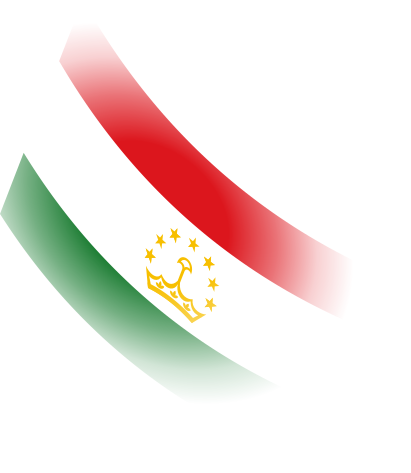
The State Flag of the Republic of Tajikistan is one of the nation’s sacred symbols. Its significance is inseparably linked to the rich history of the Tajik people, their historic struggles to preserve statehood, the development of national culture, and the achievements of the independence era. For the country’s citizens, it is more than an official state emblem: it is a symbol of pride, dignity, unity, devotion to the homeland, and respect for the heritage of their ancestors.
From the perspectives of cultural studies and history, symbols are among the important ways in which meaning and values are passed from one generation to the next. Through symbols, a society preserves its historical memory and forms a shared understanding of its past, present, and future. In this process, the State Flag can serve as a means of uniting society and expressing values shared by the nation.
Written works and books convey historical events to future generations through words, while state symbols embody those events and values in a concise and powerful form. In this respect, books, historical memory, and the State Flag are connected by a deep spiritual bond. A book preserves knowledge and historical experience, while the Flag symbolically expresses the fundamental values of statehood.
The history of Tajik statehood has its roots in ancient political and cultural traditions. At different points in history, flags, banners, and other emblems of statehood were used to represent authority, unite people, and express political affiliation. These traditions are reflected in the historical and literary works of the Tajik people.
In Persian-Tajik literary heritage, including Abulqasim Ferdowsi’s Shahnameh, the Derafsh Kaviani is depicted as a famous symbol of the struggle against oppression and the pursuit of justice. The story of Kaveh the Blacksmith, who raises his leather apron as a sign of resistance, holds a special place in the people’s historical and literary culture.
The significance of this legend lies primarily in its moral and social meaning. In literary thought, the Derafsh Kaviani symbolizes the awakening of the people, the struggle for freedom, and the defense of justice. Although there is no direct legal connection between this literary and historical symbol and modern Tajikistan’s State Flag, studying it is important for understanding the place of the flag in the Tajik people’s cultural memory.
This example shows that, in addition to their political functions, symbols of statehood can also carry moral, cultural, and educational meaning. They shape society’s understanding of freedom, justice, solidarity, and shared responsibility.
After the Republic of Tajikistan gained state independence on September 9, 1991, the need arose to establish an independent system of state symbols. Alongside creating national institutions and developing legislation, the newly independent state also had to define the official emblems of its sovereignty.
On November 24, 1992, at the 16th Session of the Supreme Council of the Republic of Tajikistan, the State Flag of independent Tajikistan was adopted. This event was of great significance in the history of modern Tajik statehood, as the new Flag came to represent the existence of an independent state and the people’s national aspirations.
The adoption of the State Flag at this sensitive point in history carried profound political and spiritual meaning. Tajik society was facing difficult political circumstances, and safeguarding statehood, ensuring peace and stability, and restoring national unity had become matters of the highest priority. In these conditions, the State Flag became one of the symbols of hope for a peaceful future and a stable state.
In this process, the role of the Founder of Peace and National Unity — Leader of the Nation and President of the Republic of Tajikistan, His Excellency Emomali Rahmon — in strengthening the foundations of independent statehood, restoring peace and national unity, and elevating the status of state symbols has been significant. During the independence era, respect for the State Flag gradually became an important part of the culture of statehood and patriotic education.
In the Republic of Tajikistan, November 24 is celebrated each year as State Flag Day. This occasion provides an important opportunity for society to reflect more deeply on the history of statehood, the meaning of independence, and the importance of national symbols.
From a legal perspective, the State Flag is one of the constitutional symbols of the Republic of Tajikistan. Under Article 3 of the Constitution of the Republic of Tajikistan, the Flag, the Coat of Arms, and the National Anthem are recognized as state symbols. This provision shows that state symbols hold a special place in the country’s system of legal values.
The Law of the Republic of Tajikistan “On State Symbols of the Republic of Tajikistan” regulates the use of state symbols and related matters. The existence of this legal framework demonstrates that respect for the Flag is not only a moral and cultural matter, but also part of the legal relationship between citizens, state bodies, and the nation’s sacred symbols.
The State Flag of the Republic of Tajikistan consists of three horizontal stripes — red, white, and green — with a crown and seven stars in the center of the white stripe. In cultural interpretations, these elements are associated with the Tajik people’s historical and spiritual values and national aspirations.
In common cultural interpretations, red symbolizes courage, self-sacrifice, and struggle; white represents purity, peace, and good intentions; and green signifies prosperity, nature, and flourishing. The crown and seven stars are also culturally associated with traditions of statehood and the nation’s historical values.
However, the scholarly study of state symbols requires a distinction between their legal description and their cultural interpretation. The Flag’s design, colors, and composition are defined by law, while the historical and spiritual meanings attributed to its elements may be subjects of various scholarly studies.
One important issue in studying the State Flag is its connection to national identity. National identity is the process through which people understand their belonging to a nation and become familiar with its history, language, culture, and shared values. It develops through knowledge, education, and social experience.
The State Flag plays an important role in this process as a symbol of national unity. When it flies, citizens—regardless of their profession, age, or social position—feel that they belong to the same state. This quality makes the Flag an important means of strengthening social cohesion.
In an era of globalization, protecting national identity is becoming increasingly important. Advances in information technology, expanding international ties, and cultural exchange bring new opportunities, while also making it necessary to protect historical and spiritual heritage.
In these circumstances, studying the history of state symbols, including the Flag, can help people develop a thoughtful attitude toward national values. Respect for the Flag should not be limited to ceremonial events; it should also be reflected in citizens’ daily actions, observance of the law, protection of the state’s interests, and responsible conduct in society.
Libraries and educational institutions have a particularly important role in this regard. As centers for collecting, preserving, studying, and sharing knowledge, libraries can make a valuable contribution to developing citizens’ historical awareness and legal culture.
In library science, a library is more than a place where books are stored. It is a social and cultural institution that provides access to information, supports learning, preserves written heritage, and connects the knowledge of different generations.
Libraries allow citizens to explore historical works, scholarly sources, legal documents, and cultural literature. This access is important for studying the history of the State Flag and understanding its significance.
Libraries can help improve public knowledge of state symbols by organizing book exhibitions, presenting historical works, holding educational discussions, and providing scholarly literature. For example, a book exhibition entitled “The State Flag: A Symbol of Independence and National Identity” could feature works on the history of Tajik statehood, the Constitution, state symbols, and national culture. Such an event would have both educational and character-building value.
This work is even more important in the libraries of higher education institutions and professional development institutes, since their students and instructors can apply the knowledge they gain in their future professional and social activities.
The Library of the Institute for Advanced Training of the Ministry of Justice of the Republic of Tajikistan, as an important part of the institute’s educational and scholarly environment, can also play an effective role in promoting constitutional values, studying the history of statehood, and improving the legal culture of its trainees.
The purposeful use of legal, historical, and cultural literature, access to reliable sources, and guidance that encourages independent study are all important in this work.
Another issue that deserves attention is the need to develop a reading culture among young people. National identity and respect for state symbols cannot be built through speeches and slogans alone. They require a sound knowledge of history, a broad outlook, and an understanding of civic responsibility.
Reading historical and literary works helps people better understand past events, the experience of statehood, and the nation’s cultural values. The higher a citizen’s level of knowledge and education, the more informed and steadfast their attitude toward the nation’s sacred symbols can be.
Books and the Flag can therefore be seen as two different but related means of preserving national values. A book preserves history and knowledge through text, while the Flag symbolically expresses the values of statehood. Both play an important role in shaping historical memory and the spiritual bond between generations.
At the same time, the development of digital libraries and the use of modern information technologies create new opportunities to promote national values. Collecting and providing digital materials on the history of statehood, state symbols, and national legislation can make relevant information more accessible to readers.
Nevertheless, the use of information technology should go hand in hand with selecting reliable sources and approaching information critically. In digital spaces, inaccurate information and unfounded interpretations can also spread. For this reason, librarians have an increasingly important role in guiding readers toward trustworthy scholarly and legal sources.
The study of the State Flag’s history should also rely on official documents, scholarly works by historians, legal literature, and other credible sources. This approach helps ensure that citizens’ knowledge of state symbols is grounded in historical evidence and legal standards.
Another important aspect of the State Flag is its role in international relations. Every state’s flag is used at diplomatic events, international gatherings, sporting competitions, and other official occasions as a sign of sovereignty and a means of representing the state.
When the Flag of the Republic of Tajikistan flies on the international stage, it represents not only the existence of an independent state, but also the history, culture, and achievements of the Tajik people. For citizens, especially young people, this can be a source of pride and an inspiration to contribute constructively to society.
In such settings, the State Flag connects national feeling with civic responsibility. Citizens understand that the country’s reputation depends not only on the work of state bodies, but also on the knowledge, culture, conduct, and achievements of every member of the nation.
For this reason, respect for the State Flag should be accompanied by a commitment to learning, conscientious work, observance of the law, protection of national interests, and contribution to the country’s development. In modern society, patriotic education should be grounded in knowledge, responsibility, and respect for human values. Love for one’s homeland means respecting its history, protecting its language and culture, obeying the law, and contributing to society’s progress.
The State Flag can serve as a unifying symbol in this process. It reminds citizens that independence and statehood are values whose protection and strengthening are the shared responsibility of society.
State Flag Day should therefore be regarded not only as a ceremonial occasion, but also as an opportunity to study history, develop legal awareness, and strengthen national identity.
Educational institutions, libraries, research centers, and other cultural organizations can work together to create favorable conditions for promoting historical and legal knowledge and respect for the nation’s sacred symbols.
In particular, scholarly forums, reading competitions, exhibitions of historical literature, and educational meetings can help raise young people’s awareness of the history of the State Flag.
The preparation of recommended reading lists, presentations of books on the history of independence, and the provision of scholarly materials in electronic form are also effective ways to develop national awareness.
In light of the above, the State Flag of the Republic of Tajikistan can be said to have broad historical, legal, political, and spiritual significance. Alongside expressing the state’s sovereignty, it embodies the nation’s historical memory and helps strengthen national identity and unity.
The history and significance of the Flag should be studied through scholarly knowledge, legal documents, and the nation’s cultural heritage. Only then can respect for state symbols acquire deeper educational meaning and become a lasting part of citizens’ outlook.
Libraries are important in this work as centers for preserving and transmitting knowledge. By presenting historical sources, promoting reading, and organizing educational events, libraries can help people gain a deeper understanding of the values of statehood.
In conclusion, the State Flag of the Republic of Tajikistan is more than an official symbol of sovereignty. It embodies historical memory, national pride, social unity, and the spiritual bond between generations. It brings together the nation’s past, present, and future within a shared system of national values.
Respect for the State Flag stems from respect for the homeland’s history, recognition of the values of independence, observance of the Constitution, and civic responsibility. Every citizen should understand that protecting the nation’s sacred symbols is not solely the responsibility of state bodies; it is the moral responsibility of society as a whole.
Books keep the nation’s historical memory alive, knowledge shapes people’s outlook, and the State Flag embodies these values in a single image of national statehood.
Therefore, honoring the State Flag, studying its history, and promoting its legal and spiritual significance should remain a constant focus of public attention.
Shoydodov Shohrukh Saydmurodovich
Head of the Library, Institute for Advanced Training of the Ministry of Justice of the Republic of Tajikistan