Throughout the history of the formation and development of human statehood, state symbols have held a special place. They have served as a means of expressing sovereignty, the unity of political authority, and the national identity of peoples. Alongside a legal system, a governing structure, and defined territory, every independent state has symbols that represent it in domestic and international relations. The State Flag is one of the most important symbols of sovereignty. It embodies the political will, historical memory, spiritual values, and national aspirations of society.
The State Flag of the Republic of Tajikistan likewise has profound historical, political, legal, and cultural significance. It is not merely a piece of fabric bearing particular colors and images; it represents state independence, national unity, historical self-awareness, and the spiritual bond between past and present generations. Accordingly, examining the State Flag through the lens of the theory of state and law makes it possible to assess more deeply its place within the system of constitutional values and the process of strengthening national statehood.
In constitutional law, state symbols are considered official signs recognized by law. Their defining feature is that the state establishes their status, form, content, and conditions of use through legal instruments. Thus, the State Flag has both symbolic meaning and legal status. Its symbolic meaning is associated with patriotism, national pride, and historical memory, while its legal status derives from constitutional recognition and statutory regulation.
In the Republic of Tajikistan, the legal basis for the status of the State Flag is set out primarily in the Constitution of the Republic of Tajikistan. Article 3 of the Constitution provides that the state symbols of Tajikistan are the Flag, the Emblem, and the National Anthem. The inclusion of this provision in Chapter One of the Constitution, which establishes the foundations of the constitutional order, demonstrates the fundamental importance of state symbols to national statehood.
The content of and procedures for using the State Flag are also governed by the Law of the Republic of Tajikistan “On the State Symbols of the Republic of Tajikistan.” This legal instrument establishes the basis for the official use of state symbols and governs the legal relations associated with them. The existence of such regulation shows that the State Flag is not only a spiritual value but also an object of legal protection.
From a theoretical perspective, constitutional recognition of the flag is one way of affirming state sovereignty. Sovereignty, as a fundamental attribute of the state, expresses the independence of state authority in addressing domestic and foreign affairs. The flag gives visible and readily understandable expression to this attribute. For this reason, flying the State Flag on government buildings, at diplomatic missions, and during official events has legal and political significance.
The history of the State Flag of the Republic of Tajikistan is inseparable from a pivotal stage in the formation of modern Tajik statehood. On November 24, 1992, the State Flag of independent Tajikistan was adopted at the 16th Session of the Supreme Council of the Republic of Tajikistan. This historic event took place at a time when Tajik society needed to strengthen the foundations of independent statehood, restore political stability, and determine the future direction of national development.
The adoption of the State Flag at this stage was particularly significant: it became a symbol of the continuity of Tajik statehood and the people’s resolve to safeguard independence. In this respect, the State Flag was not merely the outcome of a historic decision; it also represented the beginning of a new stage in the nation’s political and legal self-awareness.
The Founder of Peace and National Unity — Leader of the Nation and President of the Republic of Tajikistan, His Excellency Emomali Rahmon — has played a significant role in strengthening modern Tajik statehood by restoring peace and stability, consolidating national unity, developing state institutions, and raising the status of national symbols. During the period of independence, respect for state symbols gradually became an important part of the country’s educational, cultural, and legal policy.
One significant development in this process was the establishment of the Day of the State Flag of the Republic of Tajikistan, celebrated annually on November 24. The celebration of this date is primarily intended to strengthen respect for national symbols, increase civic responsibility, and promote the study of Tajikistan’s history of statehood.
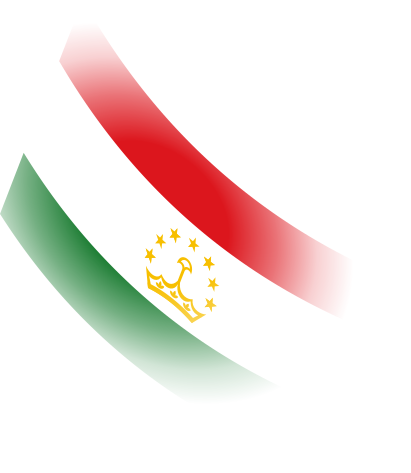
The State Flag of the Republic of Tajikistan consists of three horizontal stripes—red, white, and green. A crown and seven stars are depicted in the center of the white stripe. Together, these elements carry historical, cultural, and symbolic meaning. In common interpretations of the flag’s symbolism, red is associated with courage, struggle, and self-sacrifice; white with purity, peace, and good intentions; and green with nature, prosperity, and flourishing. The crown and seven stars are connected with the traditions of Tajik statehood and the nation’s cultural understanding.
Nevertheless, from a scholarly perspective, the flag’s official legal description should be distinguished from symbolic interpretations of its elements. The law defines the flag’s form and composition, while the cultural and historical meanings of its colors and images may be subjects of academic research. This distinction is especially important for a precise study of the nature of state symbols.
Another issue deserving attention in a theoretical study of the State Flag is its relationship to national identity. National identity is the set of values, ideas, historical memories, and markers that express a person’s belonging to a particular nation and community. The flag is one of the most visible elements of this identity and strengthens citizens’ sense of belonging to one state and one homeland.
The significance of such symbols grows in the context of globalization. The development of international relations, the expansion of cultural exchange, and the influence of information flows reinforce the need to preserve national values and historical self-awareness. In these circumstances, the State Flag, as a symbol of national unity, can play an important role in strengthening citizens’ connection with the state and national culture.
From a social and legal perspective, respect for the State Flag is one indicator of a society’s legal culture. Legal culture is not limited to knowledge of laws. It also encompasses a conscious attitude toward constitutional values, compliance with legal rules, respect for state institutions, and an understanding of civic responsibility.
A person who respects the State Flag should also demonstrate a responsible attitude toward the law, human rights and freedoms, the interests of society, and the independence of the state. In other words, respect for state symbols should go hand in hand with lawful conduct and constructive civic participation.
From this perspective, the State Flag has a spiritual and legal connection to the rule of law. A state governed by the rule of law is built on recognition of the Constitution, compliance with the law, and mutual accountability between the state and its citizens. The flag is one of the symbols expressing the unity of this system and its fundamental values.
In the work of public authorities, including justice bodies and institutions under their authority, respect for the State Flag should be matched by adherence to legality, faithful performance of official duties, and protection of citizens’ rights and lawful interests. Genuine respect for the state is expressed not only through outward respect for its symbols but also through professional conduct and service to society.
This issue is especially important for legal professionals and law enforcement officers. Their work is directed toward strengthening the rule of law, ensuring justice, and protecting the interests of the state and society. Their loyalty to the State Flag should therefore be reflected in their daily work through integrity, impartiality, a strong sense of responsibility, and respect for human rights.
In particular, judicial and forensic examination relies on specialized knowledge to establish facts relevant to legal proceedings. The principles of legality, professional independence, impartiality, and scientific validity are essential to this work. Adherence to these principles helps strengthen public confidence in the justice system.
In this regard, service to the state and respect for its symbols are expressed above all through responsible work, compliance with legal standards, and the competent performance of professional duties. This approach helps build a strong culture of public service and statehood.
Another important aspect of the State Flag is its role in international relations. Under international law, states are recognized as sovereign and equal subjects. The State Flag is one of the most visible signs representing a state in diplomatic relations, at international events, and through official missions.
The flying of the flag of the Republic of Tajikistan at international organizations, embassies, and diplomatic institutions, as well as at academic forums and sporting events, signifies the presence of an independent state in the international community. On such occasions, the flag is not only a state symbol but also a means of presenting the nation’s history, culture, and achievements.
The role of the State Flag in educating the younger generation also deserves particular attention. The cultivation of patriotism, respect for national symbols, and knowledge of the history of statehood should begin in the family, educational institutions, and society. Studying the history of the flag’s adoption, its legal meaning, and the place of state symbols in the Constitution can help shape young people’s civic outlook.
It is important that the study of state symbols not be limited to memorizing dates and official information. Young people should understand the meaning of independence, the importance of sovereignty, the value of peace and stability, and every citizen’s responsibility to protect the country’s achievements.
In this way, the State Flag becomes more than a sign by which the state is recognized; it becomes a spiritual value firmly rooted in citizens’ consciousness.
The relationship between state symbols and historical memory is also important in theoretical studies of state and law. Throughout their historical development, nations form values and traditions that make up the foundation of their national self-awareness. State symbols can express these values in a concise, visible, and compelling form.
The State Flag of Tajikistan is connected with the ancient history of Tajik statehood, cultural traditions, and the nation’s aspirations for independence. This is what gives it a meaning that extends beyond that of an official symbol.
At the same time, preserving national values and respecting the State Flag do not conflict with respecting the cultures and symbols of other countries. On the contrary, respect for one’s own state symbols can provide a foundation for international communication and mutual respect among peoples.
From a legal perspective, this approach is consistent with the principles of the equality of states, international cooperation, and respect for national sovereignty.
Thus, a theoretical and legal analysis of the State Flag of the Republic of Tajikistan shows that this revered symbol serves a range of purposes. It expresses state sovereignty, strengthens national identity, preserves historical memory, contributes to civic education, and represents the state in international relations.
Moreover, as a constitutional value, the State Flag should have a central place in public awareness, education, and civic instruction. Strengthening respect for the flag promotes the development of legal culture, civic responsibility, and national unity.
In conclusion, the State Flag of the Republic of Tajikistan embodies state independence, national sovereignty, the unity of society, and fundamental constitutional values. Its meaning is not limited to its form and visible elements; it is expressed in its profound historical, legal, political, and spiritual significance.
Respect for the State Flag means respect for the nation’s history, the homeland’s independence, the Constitution, and the law. Safeguarding its dignity requires every citizen not only to feel pride but also to act responsibly, remain loyal to the state, and contribute to the development of society.
Therefore, respect for the State Flag should become an integral part of society’s legal and spiritual culture. As long as respect for national symbols, social unity, and devotion to the homeland remain firmly rooted in citizens’ hearts, the State Flag of independent Tajikistan will continue to fly as a symbol of freedom, honor, and national pride.
Hasanzoda Saidali Hasan,
Head of the Technical and Forensic Examination Department, Republican Center for Forensic and Criminalistic Examination of the Ministry of Justice of the Republic of Tajikistan